
Keep most driving days under four hours, confirm one-way rental fees before fixing flights, download offline maps, and treat national-park parking and city parking as separate planning problems. The best route is usually smaller than the one you first draw.
Plan by real driving time, not map distance
A four-hour estimate can become six after fuel, food, viewpoints and congestion. Count the stops you actually want and make one of them the day's reason for travelling rather than an interruption.
Alternate long transfer days with short local days. If every morning begins with luggage and every afternoon ends after dark, the trip is a relocation schedule, not a road trip.

Rent the smallest comfortable car
Large SUVs feel reassuring on a booking screen and cumbersome in historic centres, parking garages and narrow scenic pullouts. Choose for luggage and passengers, not the fantasy version of the route.
Confirm whether the booking includes unlimited mileage, which driver names are covered and what the one-way fee does to the total. Airport taxes and city-centre parking can reverse the apparently cheapest pickup option.
- Photograph the car at pickup and return.
- Keep one payment card available for the rental deposit.
Fuel, tolls and parking are route decisions
Fuel stations can be sparse in remote regions and payment rules vary. Refill before entering a long national-park corridor rather than waiting for the warning light.
Toll systems and rental-company programmes differ by state and road. Parking is the larger everyday cost in major cities, which is why a route that ends with several urban nights should return the car before the city stay.
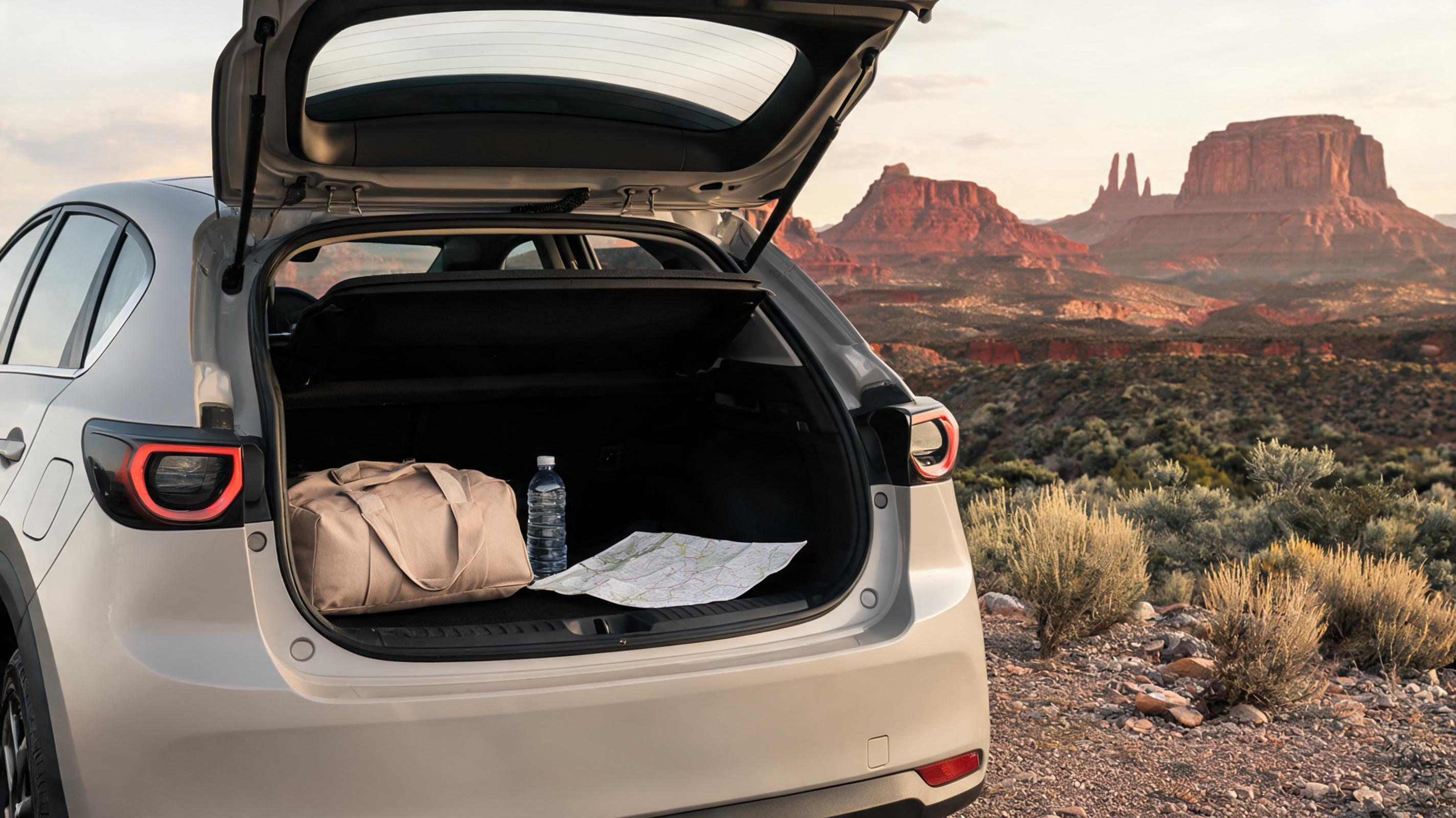
Build a bad-weather version of the route
Wildfire smoke, snow, storms and extreme heat can make the scenic road unsafe or unpleasant. Save the official road-condition source for each region and know which stop can be removed without collapsing the itinerary.
The fallback does not need to be equally dramatic. It needs to keep you out of a dangerous drive and give the day a shape — a smaller town, museum, food stop or earlier arrival.
Frequently asked questions
How many miles should I drive per day?
There is no universal number, but two to four hours of actual driving leaves room for stops. Use six hours as an occasional transfer day, not the daily pattern.
Should I keep the car in New York or San Francisco?
Usually no. Return it before the city portion unless the accommodation includes practical parking and you need the car for day trips.