Use an IC card for ordinary journeys, Google Maps or a local transit app for live routing, and favour a direct train over a theoretically faster route with several transfers. The Yamanote Line is useful, but it is not the answer to every trip.
Use an IC card and let the fare calculate itself
An IC card removes the need to price ordinary journeys in advance. Tap in and out, keep enough value loaded and use ticket machines or supported mobile wallets to top up.
Separate tickets can still be required for reserved intercity trains and some airport services. The card simplifies local movement; it does not replace every booking.
JR, Tokyo Metro and Toei are different networks
The map combines several operators, which is why two nearby lines can involve a new gate and a new fare. Route planners handle this well; visitors get into trouble when they assume every transfer happens inside one paid area.
The Yamanote loop connects Shinjuku, Shibuya, Ueno and Tokyo Station, but east–west Metro lines are often faster. Follow the suggested route and pay attention to station exit numbers.
- Screenshot the destination name in Japanese for taxi or station help.
- Use the carriage guidance in route apps when a transfer is tight.
Airport transport depends on where you sleep
From Haneda, rail and monorail options are quick for many central districts. From Narita, express trains and buses divide their usefulness by hotel location. There is no universal best airport train.
After a long flight, a direct airport bus to the hotel can be worth a slower headline time if it avoids hauling luggage through a complex station. Compare the final walk and arrival hour.
Rush hour, taxis and walking
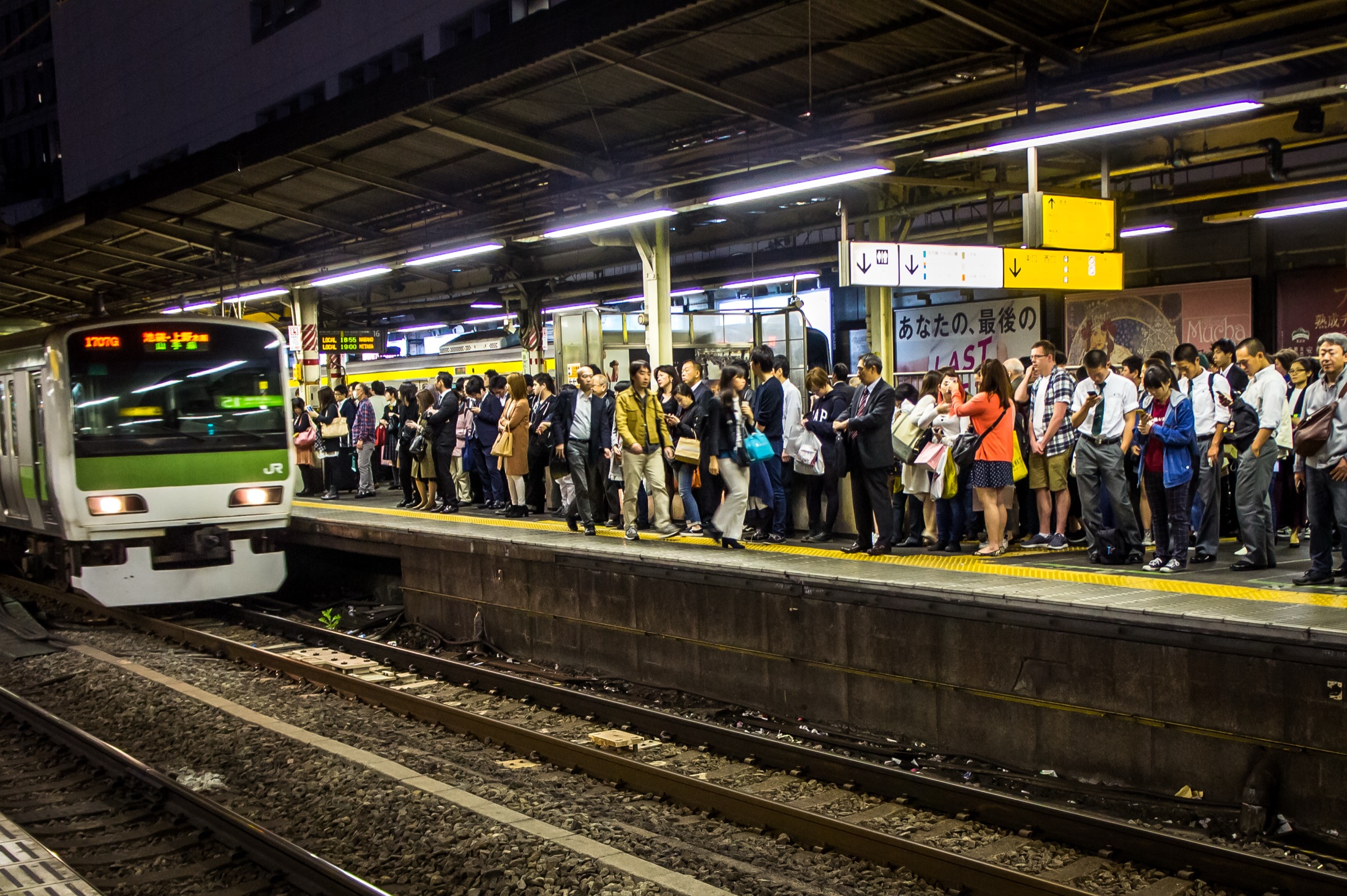
Avoid bringing large luggage onto commuter trains during the weekday peaks if you can. Forwarding luggage between hotels can make a multi-city trip easier and lets you travel with a small overnight bag.
Taxis are clean and useful late at night or for a short group journey, but traffic and distance make them expensive across the city. Walking is essential within neighbourhoods; Tokyo's best details live between the stations.
Frequently asked questions
Do I need a Tokyo transport pass?
Not necessarily. IC-card pay-as-you-go travel is simpler for mixed JR and Metro journeys. A pass can help only when your day stays mostly within its covered network.
Is the Yamanote Line enough for sightseeing?
It connects many major districts but not all useful routes. Metro lines often provide more direct east–west journeys.